
A Driver’s Perspective on Porsche’s Modern 911-based GT Cars

Whenever I talk with fellow GT enthusiasts, one common theme stands out. Enthusiasts want cars that offer a more engaging driving experience. They want cars that challenge their skills, respond precisely to inputs, and deliver strong tactile feedback. They also want a more analog experience—one that emphasizes mechanical sensations and sounds that complement that sense of engagement. From my perspective, Porsche’s GT division excels at this more than any other brand.
Part of the mission of GT Driven is to assist fellow enthusiasts in finding the ideal GT car—one that perfectly balances desired performance traits. Over time, I intend to offer detailed reviews of every GT model released since 2001, though compiling these will be a gradual process. For now, I start by highlighting the major technological changes that distinguish each generation and model of the 911 GT car range.
Evolution of the GT Car Formula
Spend enough time in Porsche’s modern GT cars (2001 - present) and you start to notice that each generation carries a distinct fingerprint—not just in raw performance numbers, but in the way the car asks you to drive it. The water-cooled GT lineage is not a straight line from “raw” to “refined,” but an ongoing conversation between mechanical honesty and motorsport-bred sophistication. Every major change—every suspension pivot, aero surface, or geometry tweak—translates to a different experience. What follows is a driver’s-eye view of that evolution: how each generation behaves, why it behaves that way, and how Porsche’s engineering decisions shape what you feel from behind the wheel.
996 GT3, GT3 RS, and GT2: The Mechanical Baseline
The context matters. When Porsche introduced the 996, it was under immense pressure. Water cooling, a shared front-end design, and a mass-production mindset aimed at financial survival fundamentally changed the character of the 911. The 996 GT3 was Porsche’s antidote. Rather than soften the new platform, Porsche Motorsport used it as a proving ground. The GT3 was conceived not as a halo car, but as a homologation-minded tool to reconnect the road car with the company’s racing DNA.
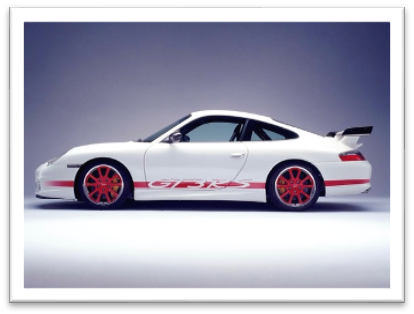
What truly separated the 996.1 and 996.2 GT3s from a contemporary Carrera wasn’t headline output, but intent. The Mezger engine alone set it apart: a dry-sump design with separate oil scavenge stages, individual throttle bodies, and a crankcase derived directly from Porsche’s Le Mans program. Unlike the M96 engine in standard Carreras—with its integrated sump, hydraulic lifters, and comfort-biased tolerances—the GT3’s powerplant was built to live at sustained high RPM under race-level loads. Chassis tuning followed the same philosophy. Spring rates, damping, alignment, bushings, and ride height were all specified for track use first, road compliance second. Weight reduction wasn’t cosmetic; it was systematic, targeting rotational mass, unsprung mass, and anything that interfered with driver feedback.
From behind the wheel, the difference was unmistakable. While the 996 Carrera felt capable and fast, the GT3 felt alive. And it was track ready as delivered from the factory. When I purchased my 996.2 GT3 in 2005, I took the car to the track almost immediately with no modifications other than adjustments to the front sway bar and tire pressures.
The 996.2 GT3 RS took things one step further. The wider track and lighter bodywork make the car more responsive and communicative. The whole car feels like it’s been tightened one click everywhere. Mid-corner corrections are finer, more delicate. Classical technique is rewarded: smooth hands, early rotation, throttle as a scalpel instead of a switch.
For those who crave a pure analog experience, the 996 GT3 and GT3RS are the closest you can get. Since the elimination of mechanical fuel injection on the G-model, every 911 since has had some degree of digitization. But the 996 GT3 and GT3RS are as raw as any 911 produced since the mid-70s. There’s no stability control, no traction control—no electronic driver aids of any kind. It’s just you and the car.
If the 996 GT3 represented Porsche Motorsport’s ideal of balance and discipline, the 996 GT2 was its unapologetic counterpoint. Developed in parallel with the GT3 but aimed at a different expression of performance, the GT2 paired the Mezger-derived flat-six with twin turbochargers and stripped away both all-wheel drive and most electronic safety nets. In doing so, Porsche created a car defined less by finesse than by consequence. The turbocharged engine delivered a surge of torque that overwhelmed the rear tires if treated casually, while the absence of front drive shifted the burden of traction and stability squarely onto the driver’s right foot. From the cockpit, the GT2 feels heavier in intent and more demanding in execution: braking zones arrive faster, throttle application must be measured, and corner exits are an exercise in restraint. It was not designed to be approachable, nor was it meant to be. The 996 GT2 exists as a reminder that Porsche’s GT philosophy was never singular. Alongside the GT3’s pursuit of precision, Porsche was willing to build a road car that reflected the raw, unfiltered character of its most fearsome race-bred powertrains.
997 GT3, GT3 RS, GT2, and GT2 RS: Precision Without Losing the Edge
The 997 GT3 feels immediately more mature—still purpose driven, but more disciplined. The steering gained a touch of weight and accuracy. The chassis no longer skips and fidgets over mid-corner bumps the way an early 996 might. Purists might object to the introduction of PASM to the 997 GT line-up. But in GT guise it’s less about ride comfort and more about keeping the tires working. The “comfort” setting provides more compliance for B-roads while the “sport” setting is better suited to track use.
From the driver’s seat, the sensation is one of alignment: engine, chassis, and steering all respond as one. The Mezger’s ability to hang at high RPM lets you balance the car on maintenance throttle with more nuance. And you can trim your line with your right foot in ways that feel almost telepathic once you’re in rhythm.
The 997 GT3 RS sharpens that theme. With its wider stance and more aggressive alignment, the 997.1 RS, shifted the balance closer to race car territory. With the 997.2 RS the difference is even more apparent. From my perspective, the 997.2 RS was the first road going Porsche to feature aerodynamics that you could really feel in high-speed corners. Optional dynamic engine mounts also help steady the mass hanging out back when you lean on the car. Heavy brake zones and direction changes feel less like you’re persuading the engine to follow and more like it is truly part of the chassis—making weight transfer feel more intuitive as you transition from braking to throttle application. I was extremely fortunate to be able to buy a 997.2 GT3 RS4.0 off the showroom floor in 2011. At the time it was just another Porsche (no ADM if you can believe it), and I didn’t hesitate to take it to the track just as I did with the 996 GT3. The car was immensely capable right out of the box—with no modifications required. The Mezger engine also proved bullet proof. I wouldn’t hesitate to buy a higher mileage example if the DME readout is relatively clean.
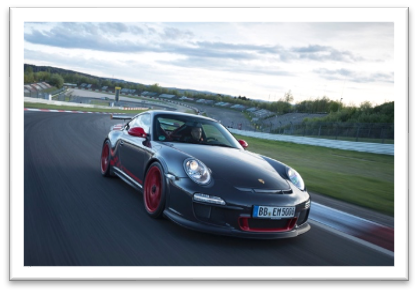
At the extreme end, the 997 GT2 and GT2 RS return as widow-makers once again—with immense turbocharged torque, rear-drive, and minimal electronic intervention. These cars can flatter a disciplined driver but will just as easily punish an inexperienced one. In many ways, these were the last truly intimidating GT cars, and they underscore the 997 era’s ethos: refined but not domesticated.
991 GT3, GT3 RS, and GT2 RS: Taking Control to the Next Level
With its 991-based GT cars, Porsche further pushed the envelope by introducing technologies that help drivers access the last 10 percent of performance. While some enthusiasts frown on the assistance provided by rear wheel steering and more advanced traction and stability control, these newer technologies allowed Porsche to broaden the appeal of the GT model range while still preserving the analog feel drivers crave. For drivers with less track experience, the 991 platform provides an opportunity to safely approach performance boundaries with less risk of surpassing them. For those with more experience, the enhancements introduced with the 991 platform translate to faster lap times.
One of the biggest changes with the 991 GT3 was the wholesale rethinking of rear-axle behavior and control. While the 911 has employed a multi-link rear suspension since the 993, the 991 introduced an all-new platform with a longer wheelbase, revised rear-axle kinematics, and — for the first time on a GT car — rear-wheel steering. From the driver’s seat, the effect is immediate. Under trail braking, the rear axle remains calmer and more predictable, allowing deeper braking without the delicate balancing act required in earlier cars. At low speeds, rear-wheel steering effectively shortens the wheelbase, sharpening turn-in and tightening corner radius; at higher speeds, it steers in phase to stabilize the car through fast transitions and heavy braking zones. The result is a GT3 that feels both more agile and settled than any before it—with only a small weight penalty.
Another major shift—and perhaps the most controversial of all—was the arrival of PDK in the 991.1 GT3. This is an area where I may differ from some GT car owners/drivers. I’ve raced cars with every kind of transmission, from h-pattern manual to true sequential dog box and PDK. And to be honest, I’m indifferent. For the sake of nostalgia, 50% of the time I want the full manual experience. But the other 50% of the time, I prefer manually shifting a PDK. Yes, the h-pattern manual requires more concentration and effort. But that doesn’t necessarily translate to a more engaging experience. I find that the ability to downshift (or upshift) mid corner is just as satisfying. It gives you more options and reduces cognitive load. It’s also faster on track.
For what it’s worth, I never let the PDK shift for me. Not only does that eliminate an important element of driver engagement, the PDK’s control unit doesn’t always get it right—no matter what Porsche and the car magazines say. Sometimes PDK leaves the car in a gear that is too low (higher rpms) when you’d be much faster and more stable with a short shift to a higher gear (lower rpms). PDK can also downshift mid corner, making the car less stable at the limit.
Whether you choose PDK or 6-speed manual, on track the 991 GT3 feels every bit as engaging as its predecessors. PDK evokes the 991 GT3 Cup’s Xtrac sequential while the 6-speed manual brings the classic feel of the 996 Cup.
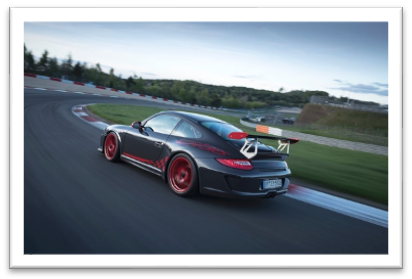
With the 991.2 GT3 and GT3 RS, Porsche brought back the durability that enthusiasts associate with the Mezger era. (Unfortunately, the reliability of all 991.1 cars—even the 4.0-liter models—is not up to Porsche Motorsport standards. Revisions inherent to the G-code engines help. But it may not be possible to achieve the same level of reliability with hydraulic lifters. Only time will tell.)
Revised suspension tuning also makes the 991.2 GT cars more effective on the track. For example, the RS’s revised aero balance, aggressive front geometry, and torque-vectoring change how the car behaves in the most demanding part of a corner. Turn-in improves, the nose feels planted, and the gap between what you ask the car to do and what it delivers narrows further.
The 991.2 GT2 RS continued to push the limits of the turbocharged, rear-wheel drive concept. Unlike earlier GT2s, however, the 991.2 GT2 RS is more approachable. Porsche applied everything it learned from the GT3 RS—rear-wheel steering, refined rear-axle kinematics, sophisticated traction and stability calibration, and genuinely functional aero—to create a car that deploys enormous power with surprising composure. From the driver’s seat, the defining sensation is compression rather than drama: the car squats, loads the rear tires, and accelerates with relentless force rather than sudden spikes. You still approach throttle application with respect, but the car no longer feels like it’s waiting to punish you for small errors. That’s not to say that the car is easy to drive. At the track I’ve noticed that many drivers still seem to be intimidated by the 991.2 version of the GT2 RS—and their lap times show it.
At a moment when Porsche’s GT cars were becoming ever more capable, complex, and electronically mediated, the 991.1 911R was conceived as a reminder of what happens when mass, inertia, and intervention are reduced rather than optimized. Built on the GT3 platform but stripped of fixed aero and PDK, the R paired the 4.0-liter naturally aspirated engine with a manual gearbox and a lighter, simpler configuration. From the driver’s seat, the effect is immediate and intimate. The steering feels less keyed-in than a GT3 RS, but more organic; the car breathes with the road instead of pinning itself to it. Throttle response and gearing encourage flow rather than aggression, and the absence of downforce shifts the focus back to balance, timing, and road reading. The 911R rewards finesse and awareness rather than relentless attack.
992 GT3 & GT3 RS: Race-Car Thinking Without Apology
Climb into a 992 GT3 and within a handful of corners you can feel the double-wishbone front suspension earning its keep. This isn’t a theoretical improvement you read about in a press release; it’s something you sense every time you lean on the front axle. Under hard braking, the car stays flatter and more composed, and as you turn in, the front tires hold onto camber with a calm not seen in earlier generations.
The result is simple but addictive: you trust the front end more. That trust changes how you drive. You brake later because the car remains stable. You carry more speed into the apex because the front tires stay hooked up over bumps and camber changes. Mid-corner, the steering feels lighter and cleaner. The rear axle still rotates with that classic 911 feel, but now it’s supporting a front end that finally has pure race-car kinematics.
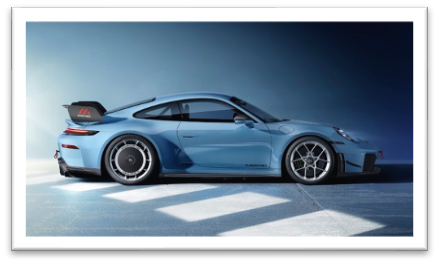
Then there’s the 992 GT3 RS, which moves the discussion from “fast GT-car” to “road-legal race car” with very little compromise in between. The active aero doesn’t feel like a party trick—and it isn’t. Stand on the brakes from big speed and you can sense the car hunkering down into the surface, the downforce loading the tires rather than simply pushing the body. Aero balance remains consistent as speed changes, so the way the car talks to you is the same on lap one as it is on lap 20. Driver-adjustable traction control and differential maps also formalize what GT drivers have been doing informally for years—tuning the car to their style and the track surface. Only now these tweaks are available with the twist of a rotary dial, manual adjustments to the shocks, sway bars and ride-height.
Like the 911R, the 992 S/T represents Porsche’s classic ethos of light weight, minimalist design with a touch of modern clarity. Rather than positioning the S/T as a nostalgic throwback, Porsche treated it as a study in mass reduction and mechanical efficiency within the most advanced 911 platform yet. Using the 992 GT3 Touring as its base, the S/T combines the RS’s more powerful 4.0-liter engine with a close-ratio manual gearbox, single-mass flywheel, shorter gearing, and aggressive weight reduction measures throughout the drivetrain and chassis. The result is a car that feels unusually alive for a modern 911. From behind the wheel, the S/T responds instantly to throttle and steering inputs, with reduced rotational inertia making every change of direction feel more immediate. There is less aero, less isolation, and less margin for error than in a GT3 RS. The S/T doesn’t chase lap times; it chases clarity. It exists for drivers who want the sharpness of a GT car without the constant presence of downforce and electronics — a reminder that even at the outer edge of Porsche’s engineering capability, lightness and simplicity still matter. The S/T is another model that I was fortunate enough to purchase new. For me the S/T captures much of what I loved about racing production cars in the 90s and 00s, but in a modern package that was designed to perform in the canyons rather than at the racetrack.
The Common Thread
Across four generations, Porsche’s water-cooled GT cars have evolved from mechanical purists to fully integrated, motorsport-informed instruments. But crucially, none of the added technology—dry-sump lubrication, PASM, multilink rear suspension, rear-wheel steering, double wishbones, active aero, etc.—exists to sanitize the experience. Each step is about making the car more stable under higher loads, more predictable at greater speeds, and more willing to give you access to its full capability.
The early cars ask you to master weight transfer and respect the pendulum.
The middle cars help you manage the limit and recover more gracefully.
The latest cars remove barriers between intention and execution, turning your inputs into lap time with an efficiency that would have looked like wizardry in 1999.
What hasn’t changed is the underlying attitude. GT cars are still engineered first for drivers who care about feedback, consistency, and control. Lap times have come down, aero loads have gone up, electronics have grown more sophisticated—but the goal remains the same: to translate pure motorsport thinking into a car you can drive on track, in the canyons, and anywhere else in between.
Well written!!